This Saturday we’ll be having an open house at 2 PM, then onward from there we’ll be watching an episode of Game of Thrones, and playing Dungeons and Dragons as part of our new Geek Out event. Unfortunately for now, the game is limited to the first 4 participants, but if there’s enough interest we’ll be expanding soon enough.
Feel free to bring snacks and stop by for the fun!
See... rendering is fun!! I downloaded a partially completed batmobile model from Blendswap.com (thanks Xuan!), but it wasn't ready for primetime yet. So I segmented, textured, and lit everything (including the Tron style wheels), before rendering it with Cycles. Everything was done in Blender 2.61 FTW. Blender continues to be my favorite open-source 3D modeling and rendering software package. It has seen tremendous growth over the last couple of years, moving from a fledgling modeling project to a blockbuster production quality modeling, animation, lighting, rendering, and post-processing toolkit.
It’s snowballing into a truly stunning software package. So, there’s no better time than now to teach you how to use it!
In about two weeks I’ll be offering an Intro Blender interface, rendering, compositing, and video motion tracking class right here at Hive76. I’m looking at a 2-day class January 28th-29th, probably 4 hours each day. The beauty is you don’t need to have any 3D modeling skills… there are a TON of LEGALLY FREE and INSANELY DETAILED 3D models widely available. Pick your favorite model and I’ll help you work with it over 2-days to get you positioning, rendering, texturing, and lighting. Hopefully on day 2 we’ll have enough time to try some basic animations inserted over video recorded from meatspace.
Any questions, come to our weekly Wednesday night open house and see what we’re talking about.
Ok, you probably can’t make the baby grand in this picture, and even the metronome is likely to be a serious DIY challenge — but you can definitely make a pretty accurate DIY scale, and you can do it cheaply and easily.
I needed an accurate scale for a science project and knocked this baby together (based on this design) using found parts. I was able to easily measure to centi-gram precision and with a little care, a scale like this could be tuned to measure to milligram precision.
Precision (the ability to discriminate between differences in mass) is largely a matter of careful construction — accuracy (the ability to weigh to an agreed upon standard) is another matter altogether, and it basically hinges on having an accurate reference. Fortunately, a great institution, born of Philly — the U.S. Mint — was wise enough to make Nickels and Pennies in rather convenient dimensions. It turns out that nickels are 5.000 grams and pennies are 2.500 grams — so you not only have sub-milligram accurate references of convenient size — you also have an easy way to cross-check your scale by using nickels to weigh pennies and vice-versa.
Details of DIY Scale
The zoomed in photo shows most of the essential elements of construction. Basically, I used a threaded 10-24 rod for the balance (10-32 would have been a better choice). I used a wall-board razor as my knife-edge pivot point. Two angle-brackets served as a hard, flat surface for the knife edge. A nickel with a hole in it and some thread served as a reference weight (I wound up with a whole array of perforated nickels and pennies). A wall-board T-square served to measure the distance from the pivot to the reference weight. I used an index card and a small mirror to make a sliding mirror in order to read the position of the weight w/o parallax error. The whole shootin’-match was held on a stand that was salvaged from a cheap drill-press. Measurements were performed by reading the distance between the movable weight and the pivot point, and entering that value in a Google Docs spreadsheet.
I definitely could have purchased a milligram scale for far less than this cost me in terms of spare time, but I learned a lot about scales in the process. Almost all of it was stuff that I knew “in principle” — but actually building the scale infused my arm-chair knowledge with real-world experience, yielding an alloy whose properties seem to have exceeded its constituent parts.
The scale was nowhere near large enough to measure my satisfaction, but I estimate that this exercise yielded just about one metric ton of fun.
Come to Hive76 on January 21st 10AM – 4PM for a build hackathon focusing on this installation! Some of the things we’ll be focusing on include touch-sensitive light chimes inspired by these, a computer vision-based theremin using Sean’s html5 synth, and altering the brightness of lights based on radio frequency interference. We’ll be splitting up in to teams to work on these problems and have some working prototypes by the end of the day. Stay for an hour or six!
Here’s a hack that managed to make me happier than it probably should have … I was in a phone conference recently and was having trouble juggling my phone while typing on my computer. I really couldn’t leave the meeting and was getting a little irked with the situation … and then I happened to spot a 3×5 index card. A few quick folds and I had a perfectly good phone stand … irk be gone.
I’m not sure why this was such a kick — maybe the fact that it was so simple and stable combined with the fact that I conceived and executed the entire idea while participating in a meeting. Plus, it really was a big improvement in my overall comfort at the moment.
At any rate, if you’re interested in making something similar, I present the following instructional video:
If you are at all interested in cognitive science, some theory behind it, or machine learning, I strongly urge you not to miss this! This will be geared towards folks without math backgrounds, and Josh will stick around to answer questions.
Our Saturday open house event is returning next year, starting on January 7th. So if you can’t make it to our Wednesday night event, feel free to check us out on Saturdays.
Saturday open house starts at 2PM; hope to see you there!
This came in to my inbox this morning. It sounds very interesting, in line with a lot of our core values, especially considering the history of libraries in Philadelphia. I’m a little disappointed because I can’t get in to that part of the city by the necessary time on a weekday, so I won’t be able to go.
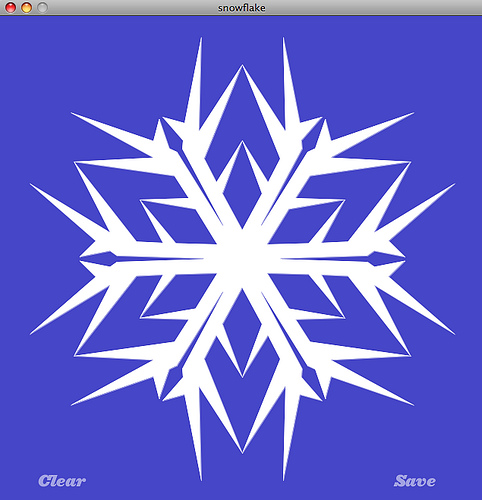
After reviewing the projects here and those proposed by NextFab members it sounds like we will be doing some form of the Chess boards, the snowflakes, some robotics, and a bunch of laser-engraving. But what if you don’t like those? Come by anyway and you can rally troops for helping you on your own project(s).
NextFab Studio will have these staff members on hand throughout the event:
Chrinstine : Textile and Industrial Design ( fabric knowledge, product design,cad, sewing )
Ian : Electronics (pcb design/fabrication, coding, wiring, soldering, etc.)
Seth : Mechanical Engineer (handtools, cad, product design)
Brandon : Multi-Media Designer ( 3d printing, graphic design, product design, cinematography, cad)